DERMATOLOGY and VENEREOLOGY at J|medical
The skin is not only our protection against the external environment but is also a real organ that performs multiple functions. When we notice changes on our skin, for example redness, itching, appearance of spots, rashes, wheals, vesicles, or moles that change color or size, it is a good habit to book a visit to the dermatologist.
What does dermatology study? It is a branch of medicine that studies, from an anatomical, physiological, and pathological point of view, the skin and its appendages (hair, nails, sweat and sebaceous glands). It also deals with prevention, diagnosis, and therapy of sexually transmitted diseases (venereology). It is a specialization in continuous evolution: due to the rapid development of scientific knowledge; due to the constant increase in the incidence of skin diseases; due to the numerous correlations with many other internal medicine specialties.
So many skin diseases could be linked to other problems? Exactly. They can be the manifestation of a systemic internal disorder or linked to the psyche (psychodermatology), or be of allergic origin (hives, eczema), infectious, inflammatory, immune (Lupus, scleroderma, etc…).
What is oncological dermatology? It is a specialization of great importance that deals with the treatment of tumor pathologies of the skin (melanomas, epitheliomas), and their prevention through monitoring of skin nevi and precancerous lesions.
- SERVICES OFFERED AT J|medical
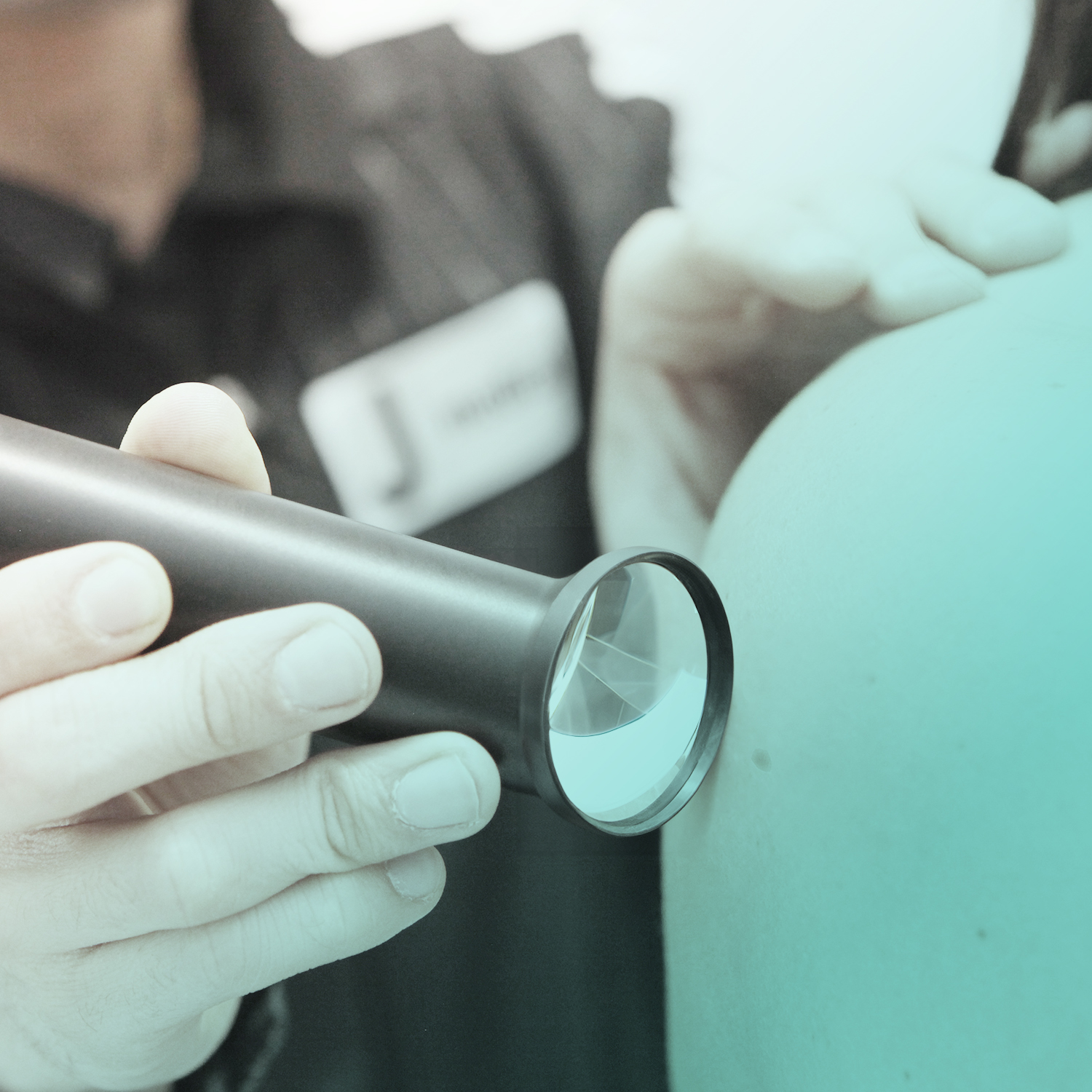
- Dermatological visit. It is a specialist visit focused on the examination of the conditions of the skin, hair, nails, and mucous membranes. The main intent is to diagnose and treat early a wide range of skin conditions (of minor or major severity), providing personalized treatment. Mole mapping. It is a dermatological exam that involves the detailed recording and analysis of nevi present on the skin. During this exam, dimensions, shapes, colors, and positions of moles all over the body are recorded. The importance of mapping lies in the possibility of detecting changes in moles over time, through periodic monitoring. This check can allow early diagnosis and timely treatment of suspicious lesions. It is a type of procedure particularly useful for those with a high number of moles or family risk factors.