DENTAL RADIOLOGY at J|medical
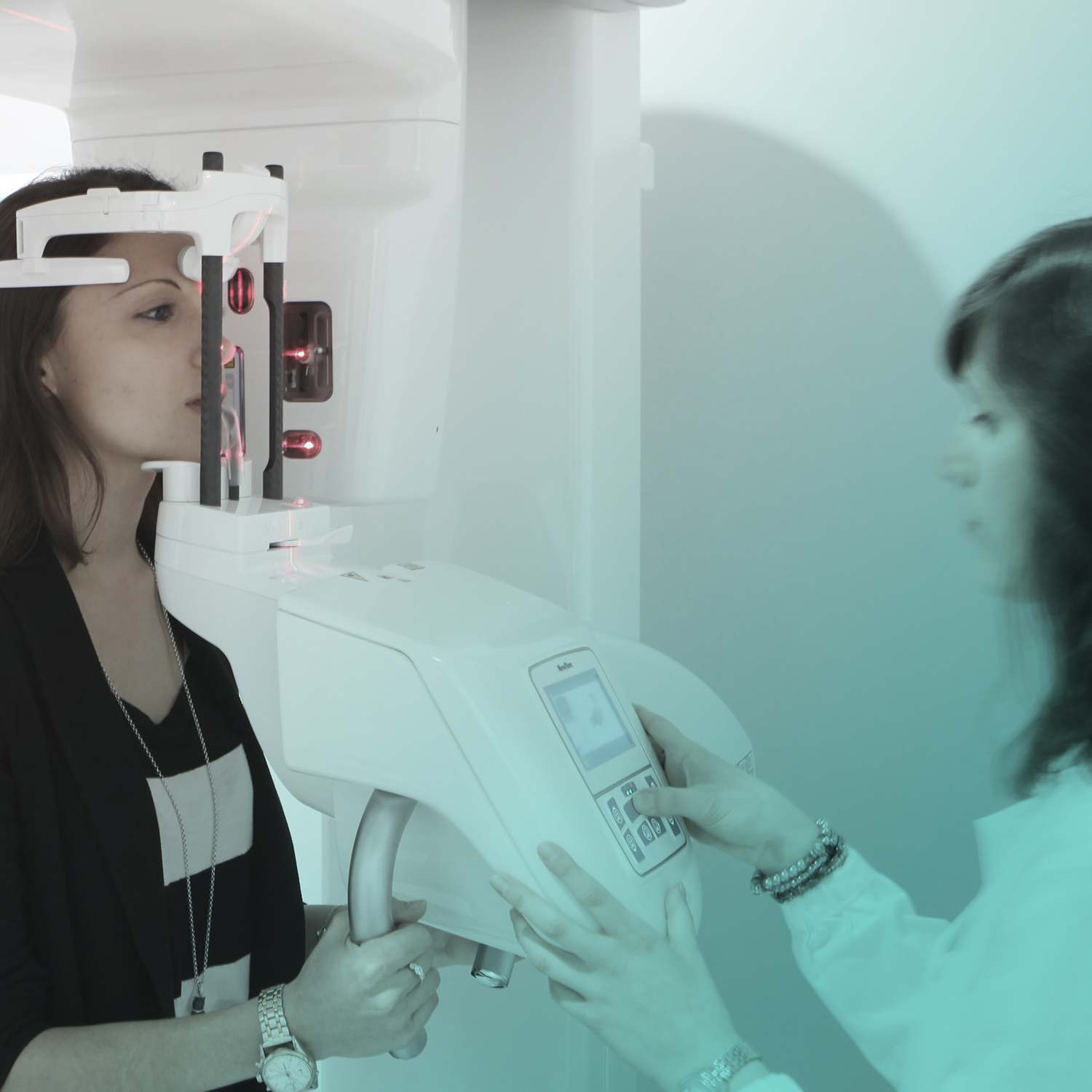
Radiology also plays an important role in the care of the oral cavity. The dentist, both in the diagnostic phase (therefore before evaluating any interventions) and in the control phase, may request the patient to undergo X-rays. Dental radiology guides the treatment plan, allowing dentists to make the best decisions for each patient.
So are these important exams? Yes. These are exams that help the doctor reveal a series of problems that cannot be found with the naked eye. We are talking, for example, about hidden cavities, bone problems (fractures caused by trauma), periodontitis, root lesions, tumors, cysts or abscesses… The list is really long.
Are they also useful for monitoring? Exactly. They are used both in the preparation and in the execution of the correct positioning of an implant. Or in orthodontic and prosthetic treatments, in order to check the progress of the intervention performed.
And for children? These exams are very useful for monitoring tooth development; important for detecting any dental inclusions; helpful for verifying the correct relationship between teeth and the maxillary arches.
SERVICES OFFERED AT J|medical: Dental Panoramic (Orthopantomography). It is a radiographic exam that provides an overall image of the maxillary bones and dental elements. It is, generally, the first exam requested by the dentist to frame the patient’s bone and dental conditions. Skull Teleradiography. It can be performed in latero-lateral or postero-anterior projection. These exams are used mainly in orthodontics and maxillofacial surgery. In children, skull teleradiography allows for complex studies to plan orthodontic treatments in order to correct occlusion defects. Cone Beam CT Exam. Allows for obtaining high-resolution three-dimensional images of bone structures and dental elements. It is particularly indicated for evaluating bone dimensions (as well as bone tissue structure) and for planning surgical treatments (implantology). It is a fundamental exam for evaluating any structural bone alterations of the maxillary sinuses, such as inflammatory osteitic lesions or bone neoformations, both benign and malignant.